


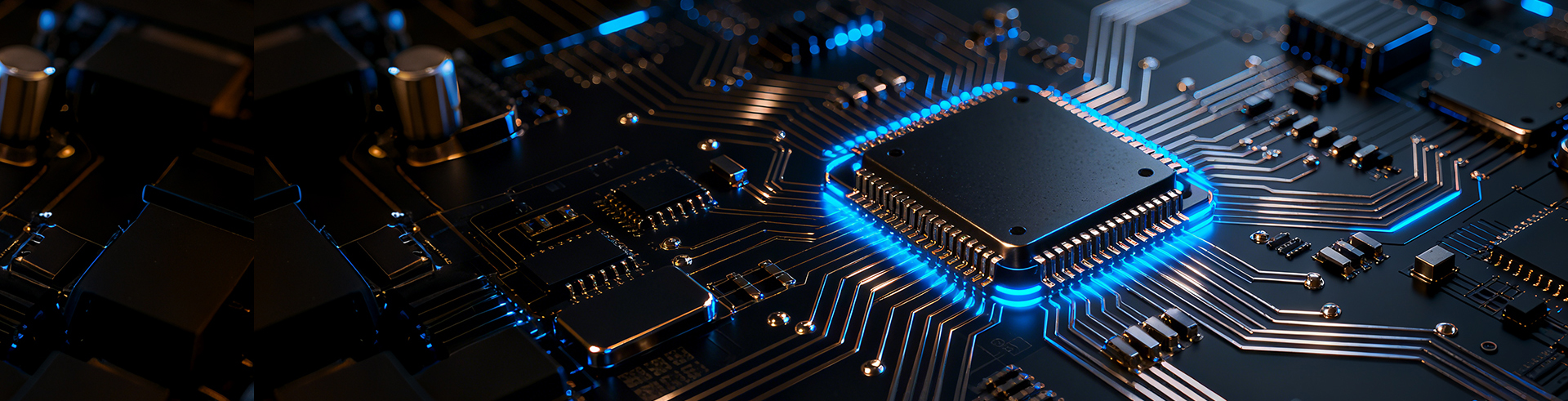

MCU stands for Microcontroller Unit, which is a highly integrated embedded control chip widely used as the control core in various electronic devices. Here is a detailed description:
1. Integrated design
It integrates CPU (Central Processing Unit), memory (RAM/ROM/Flash), and input/output interfaces (GPIO, ADC, PWM, etc.) on a single chip, enabling control tasks without the need for complex external circuits.
2. Low power consumption and low cost
- Optimized for embedded systems, it has low power consumption (suitable for battery-powered devices) and a much lower cost than traditional computer processors (such as CPUs).
3. Real-time control capability
- Direct interaction with sensors and actuators, capable of real-time data processing (such as temperature control, motor speed regulation).
- Consumer electronics: smart home appliances (such as air conditioner remotes), toys, electronic scales.
- Industrial control: PLCs, motor drives, instruments and meters.
- Automotive electronics: ECUs (engine control), window/wiper control.
- Internet of Things (IoT): Wi-Fi/BLE modules like ESP8266/ESP32.
- Medical devices: portable blood glucose meters, heart rate monitors.
- MCU: Emphasizes high integration and real-time control, suitable for fixed-function devices (such as remote controls).
- MPU (like the CPU used in Raspberry Pi): Requires external memory and hard disk, runs an operating system (Linux), suitable for complex computing (such as AI edge devices).
1. Clarify Requirements: Number of I/Os, communication protocols (such as whether CAN bus is needed), power consumption limits.
2. Development Support: Availability of mature development tools (Keil, Arduino IDE), community resources.
3. Cost and Supply: After mass production, consider the chip price and supply chain stability.
If you need specific model recommendations or application cases, please further describe your requirements!
Phone
+86 13714130672


Address
Room 1505, Senye Chuangda Building Gushu 2nd Road, Xixiang Street Bao'an District, Shenzhen China