


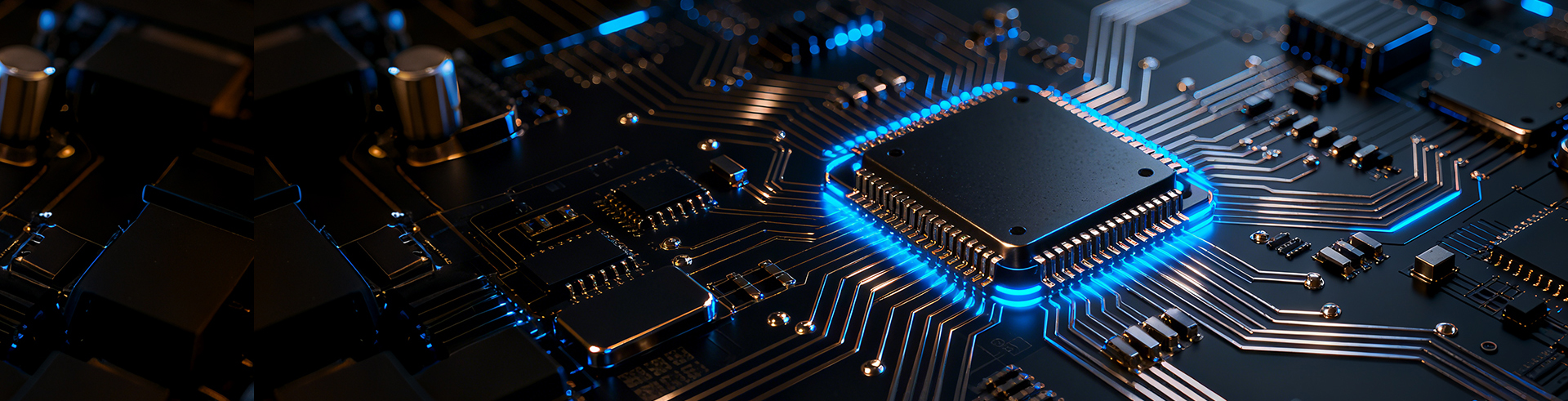

PMIC (Power Management Integrated Circuit, power management integrated circuit) is a key chip used for efficient power management, distribution and optimization.
Definitions
Wireless Charging Transmitter PMIC is a power management chip designed specifically for wireless charging system transmitters (Tx), integrating the following functions:
Power conversion: Converts the input power (e.g. 5V/12V/19V) into a high-frequency AC signal suitable for wireless charging (typically at a frequency of 100-400kHz, e.g. Qi standard).
Communication control: Communicate with the receiving end (Rx) through modulation and demodulation (such as FSK/ASK of the Qi protocol) to achieve power regulation, foreign object detection (FOD), and charging status feedback.
Efficiency optimization: Dynamically adjust the output power to improve energy transfer efficiency (e.g. ZVS/ZCS control under resonant topology).
Application scenarios
Smartphone/smartwatch wireless charging dock
Car wireless charging module
Embedded charging panels for furniture/public places
Definitions
A multi-channel PMIC is a single-chip solution that integrates multiple power management functions and typically includes:
Multi-channel output: Provides multiple independent power rails (such as Buck, Boost, LDO) to power loads with different voltage requirements (such as 1.8V, 3.3V, 5V, etc.).
Timing control: Manage the power-on/power-off timing of each power supply to avoid system startup conflicts.
Low power mode: Supports dynamic voltage scaling (DVS) or sleep mode for energy conservation.
Protection features: overvoltage, undervoltage, overcurrent, thermal shutdown, etc.
Application scenarios
Mobile devices: Smartphone/tablet (to power CPU, memory, sensors).
IoT devices: Low-power sensor nodes (requiring multiple voltage domains and sleep mode).
Embedded systems: Industrial control, automotive electronics (high reliability requirements).
| Characteristics | Wireless charging transmitter PMIC | Multi-channel PMIC |
| Core Features | High-frequency energy transmission and communication protocol processing | Power distribution and management in multiple voltage domains |
| Integrated modules | Inverter, communication modulation and demodulation, FOD | Buck/Boost/LDO, timing controller |
| Typical applications | Wireless charging transmitter | Power supply networks for complex electronic systems |
| Design Priorities | Transmission efficiency, compatibility (such as Qi) | Power integrity, low power consumption, timing reliability |
1.Wireless Charging PMIC:
Higher power (such as 50W+ fast charging), simultaneous charging of multiple devices (MPP protocol).
Integrate the MCU for intelligent power distribution (such as AutoSAR in-vehicle applications).
2.Multi-channel PMIC:
Smaller package (such as CSP), higher efficiency (GaN/SiC technology).
Support AI-driven dynamic power management (such as the NVIDIA Jetson platform).
Wireless charging project: Prioritize protocol compatibility and FOD sensitivity.
Multi-power system: Focus on the number of channels, maximum current and timing control flexibility.
By rationally choosing the PMIC, the system design can be significantly simplified and energy efficiency can be improved, especially in scenarios with limited space or high reliability requirements.
Phone
+86 13714130672


Address
Room 1505, Senye Chuangda Building Gushu 2nd Road, Xixiang Street Bao'an District, Shenzhen China